
How to Find T-Shirt Niches and Design Ideas People Already Love
Originally published on TeeSpy in . Updated .
Stuck trying to pick a niche, or to find design ideas people actually want? You are not alone. This stage takes a mix of creativity and research, and it trips up new and experienced t-shirt sellers alike.
The decisions matter, which makes them harder. Your niche decides who you are designing for, and your designs decide whether those people care.
Not all niches or designs are equal. A t-shirt shop needs both: an audience that is easy to reach and cares about something, and designs that speak to it.
Even if you are great at marketing and branding later on, without a good niche and designs people like, the rest is an uphill climb.
Once you understand the fundamentals, finding niches and design ideas becomes a repeatable process. Let’s start with niches.
What Makes a Good Niche?
1. Plenty of Passion and Pride
People buy t-shirts that say something about who they are. The niches that work best on apparel are the ones people feel proud of and want to show off.
Some audiences care much more than others. Ideally you want a crowd full of people who would happily wear your shirt in front of friends, family and the rest of the world.
Most t-shirt purchases are emotional. It is not always about the cleverest design, it is about how strongly the buyer feels when they see it, and how they will feel wearing it. Keep that in mind and you are already ahead.
If a niche is short on passion or pride, it is going to be a hard sell, however big it is.
But how do I know if my niche has enough passion?
Large communities are often a sign of a passionate crowd, since it takes enthusiasm to grow them. But size alone does not guarantee passion.
A more reliable sign is that people already spend money on the hobby, job or identity in question: dedicated shops, existing merchandise, clubs, events and active forums all point to an audience that cares.
Start by brainstorming. Here are some broad categories to get you going, which you can then narrow down into sub-niches:
- Hobbies
- Sports
- Cars
- Occupations
- Pets
- Family roles
- Faith
- Culture and heritage
Also think about the sense of belonging people get from teams, events and festivals, and about people who simply like to stand out and start a conversation.
Look for the most passionate audiences first, then check the other factors below.
2. A Bigger Audience Gives You Room to Grow
A tiny niche may have less competition, but it also limits how far you can go. Pick something too narrow and you can run out of people to sell to.
A niche with a large audience gives you more potential customers, and it still leaves room to break it into smaller groups that you target with specific designs.
For example, “pets” is far too broad to design for. “Dogs” is still enormous. A single breed, like pugs, is a smaller but very devoted group, and you can go further by focusing on a specific feeling such as humor or pride.
A bigger audience helps, but it is not everything. If the passion or pride is not there, it will still be a hard sell.
But how do I know if my niche is big enough?
There are many ways to estimate audience size. One of the easiest is Meta’s own ad tools. When you build an audience in Meta Ads Manager and add an interest, it shows an estimated audience size for Facebook and Instagram before you spend anything.
The same screen also shows how specific your targeting is, which helps you later when you tailor designs and ads to the audience.
Do not chase numbers alone. A big audience is not the same as an interested one. Passion and the other factors here still matter.
Look for niches with large audiences, so you have more people to reach as you grow.
3. Able and Willing to Buy Online
Even when everything else points to a great untapped niche, check that the audience can actually buy from you. If most of them are not online, or are not comfortable shopping online, it will be a struggle.
For example, selling directly to children is very difficult. Most of them cannot pay online, so you would really be selling to their parents.
Do a quick sanity check: can your audience easily find and buy your shirts?
4. Easy to Target
Your audience needs to be easy to identify, so you can reach it. That matters for ads, but also for the words you use in your titles, tags and descriptions.
Meta Ads Manager helps here too. Browse the interests in the targeting options and look for your niche.
If you cannot find a close match, the niche may be hard to reach through social ads, which makes it harder to test designs and campaigns.
A niche that is hard to target makes everything after it harder: designs, listings and ads.
Where Can You Find Good Niches?
Now that you know what to look for, it is time to hunt. These are the main places to search.
Social Networks
Facebook groups and pages show you where passionate communities gather. Large groups with lots of daily posts and comments are a good sign, and they also show you how members talk about themselves.
Instagram and Pinterest are hives of visual, passionate activity. Search hashtags and keywords related to your niche. If you find lots of saving, liking and sharing, there is probably an audience worth designing for.
Marketplaces
Amazon, Etsy and eBay are great places to sense-check a niche. If sellers already cater to it, the demand is real. Browse Amazon Best Sellers by category, and look at Etsy listings in your niche to see how many favorites and reviews they have collected.
Search Engines
Search your ideas on Google and see what comes up. Busy forums and fan sites are a strong sign of passion, and of places to market later.
Google Trends is useful for spotting rising interest in a topic and seasonal patterns. You might spot the next big trend early.
Finding Popular T-Shirt Design Ideas
Once you have a niche, you need designs. But relying on your own creative energy alone is slow. You can spend weeks creating, testing and redesigning before you learn what your audience likes.
A more efficient approach:
- Find out what people in your niche already love
- Create original designs with your own fresh angle
- Get good at branding, listings and targeting
Researching popular designs takes time, but it is worth it. Here is how to start.
Check Pinterest
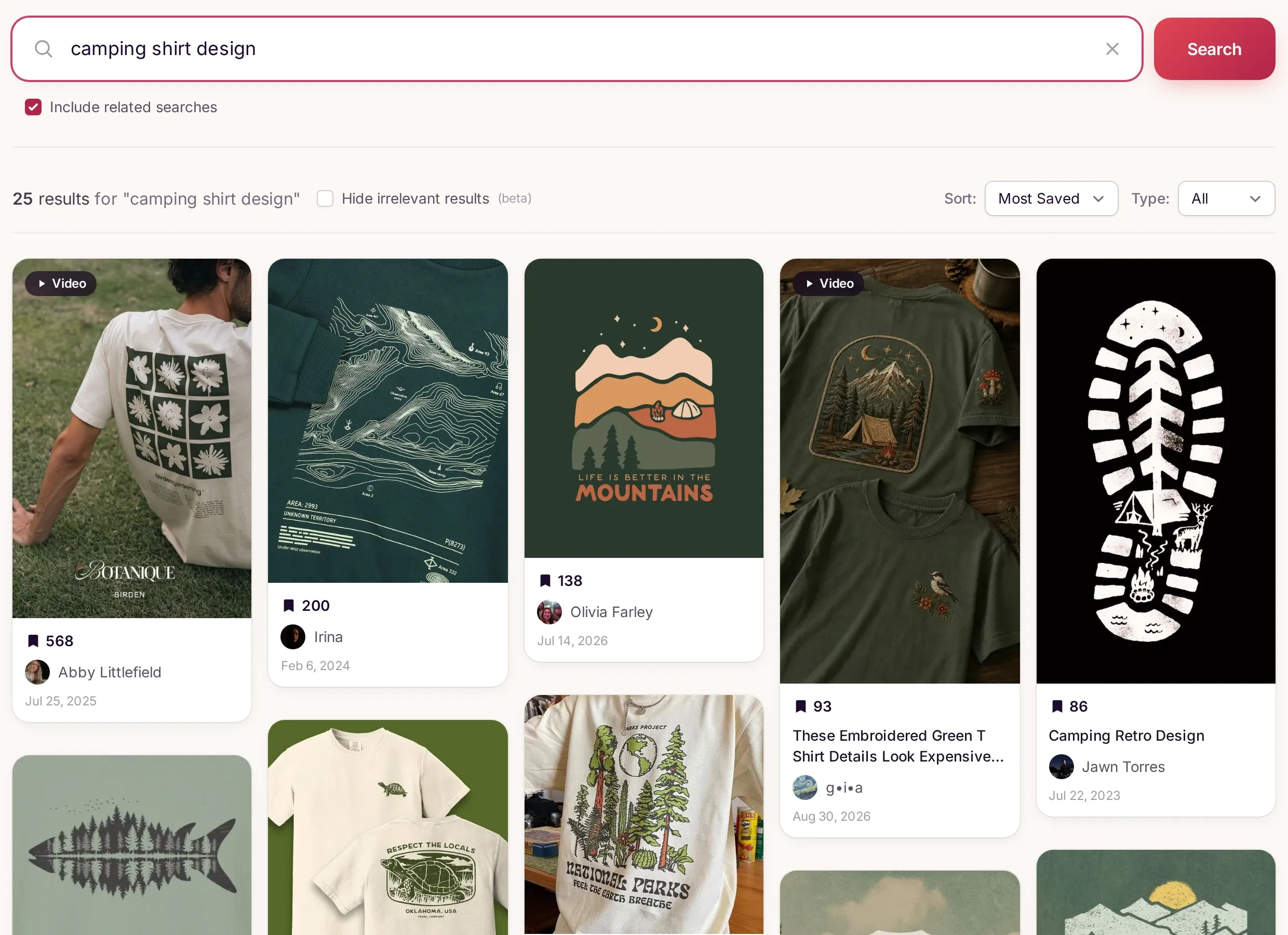
Pinterest is a goldmine for design research. People save the designs they love, so you can find popular ideas from many sellers and platforms in one place, then follow related pins to discover more.
Search for your niche plus words like “shirt” or “tee,” and pay attention to which pins get saved the most.
The catch is that Pinterest does not let you sort search results by saves. That is why we built Sorting Social: it runs a Pinterest search and sorts the results by saves, so the most popular pins come first. It does the same for Etsy (by favorites) and Wish (by purchases).
Browse the Marketplaces
Next, go straight to the places where people buy t-shirts. Most of them let you browse by category or popularity, though few show exact sales numbers.
- Etsy: look for Bestseller badges, favorites and review counts
- Amazon: Best Sellers rankings by category, and many listings show how many were bought recently
- Redbubble and TeePublic: browse by tag to see which styles keep showing up
- Spring (formerly Teespring): browse creator shops and products in your niche
Measure Social Engagement
Likes, saves, shares and comments are a good sign of how popular a design is. Look at Pinterest saves, Etsy favorites, and the reactions and comments on Facebook and Instagram posts that feature shirts in your niche.
These methods take time, but they work. Once you know what people respond to, your job is to come up with your own original twist.
Make It Your Own
Use what is popular as a signal, not a template. Look for the themes, phrases, styles and colors that keep coming up, then create something original. Copying another seller’s design is unfair to them and a fast route to a takedown. If you are thinking about parody or mashup designs, read our guide to fair use and t-shirt designs first.
The sooner you settle on a niche and learn what its fans love, the sooner you can start building your t-shirt shop. Good luck!